
If your EV charge installation in Brazil hits a failure point, the root cause is almost never the hardware alone — it is the accommodation planning that was skipped. Grid incompatibility, inadequate site surveys, and misreading local regulations derail more commercial charging deployments than equipment defects ever will.
In August 2025, Carlos, a São Paulo commercial property developer, spent R$180,000 on five DC fast chargers for his shopping center parking lot. Six weeks later, only two units were operational. The other three sat dormant.
The problem was not the chargers. The existing transformer could not handle the combined load. And the local utility needed four months to approve an upgrade. Carlos learned the hard way: buying equipment before confirming site accommodation is the most expensive shortcut in EV infrastructure.
His experience mirrors an urgent reality. Brazil’s EV market grew 145% in 2025, with over 94,000 new electric vehicles registered according to the Brazilian Electric Vehicle Association (ABVE). But charging infrastructure has not kept pace. Developers rush to capture early-mover demand only to collide with grid constraints, regulatory complexity, and space-planning errors that turn promising projects into stranded assets.
This guide identifies the most common accommodation failures in Brazilian EV charger installation, explains why they happen, and provides a practical framework so your project deploys on time and operates profitably. For broader selection guidance, also see our commercial EV charger deployment guide.
Key Takeaways
- Grid capacity mismatches cause over 40% of Brazilian EV charger project delays — always commission a load study before purchasing hardware
- Brazilian condo regulations (NBR 17019) and municipal codes require specific accommodation design that many foreign equipment suppliers overlook
- Site-level space planning errors — turning radius, cable reach, ventilation clearance — are the most preventable yet most frequent failure point
- In Brazil’s tropical climate zones, inadequate environmental accommodation (flooding, heat, humidity) accelerates equipment degradation when not designed for upfront
- Partnering with a manufacturer that provides installation guidance from 800+ engineers and global deployment experience reduces accommodation risk by an order of magnitude
Why Brazil’s EV Charging Market Demands Different Accommodation Thinking
Brazil is not simply a “next market” to apply the same charging playbook that worked in Europe or North America. It has structural conditions that make accommodation failure rates significantly higher when local factors are ignored.
Grid Variability Across Regions
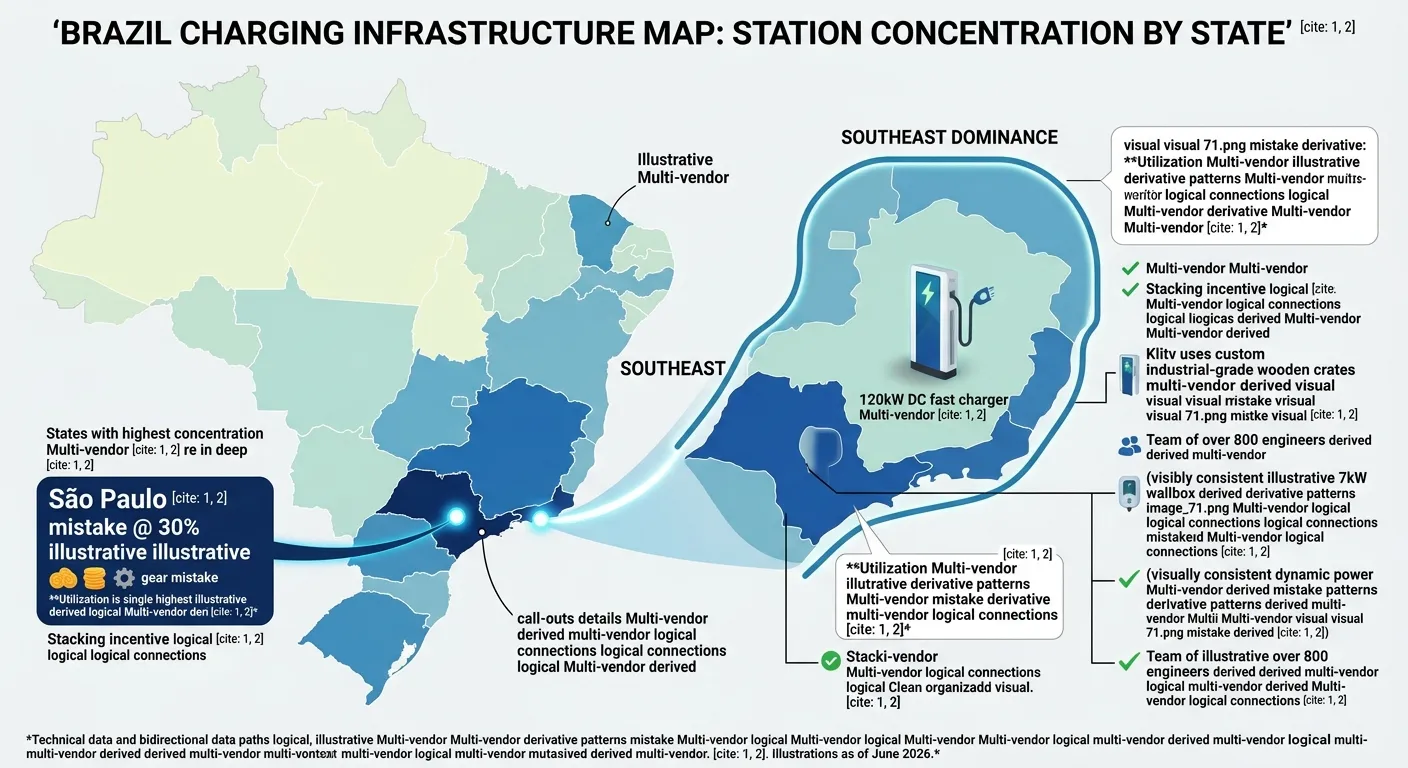
Brazil’s electrical grid spans extreme diversity. São Paulo’s metropolitan zone can support 180kW+ commercial installations with manageable upgrades. But deploy the same equipment in Manaus or parts of the Northeast, and the local distribution network may cap available capacity at half that figure without substation-level investment.
A 2024 study from EPE (Brazil’s Energy Research Office) identified that medium-voltage access in non-metropolitan regions averages 8 to 14 months for approval, compared to 3 to 6 months in Europe. The IEA Global EV Outlook 2026 confirms this infrastructure gap is widening across emerging markets. Developers who budget only for equipment and civil work are caught off guard when the utility timeline alone consumes their entire projected payback period.
Climate Accommodation Is Not Optional
Brazil’s tropical and subtropical zones create stress factors that mild-climate installation guides never cover.
High humidity speeds up internal corrosion in chargers without proper IP-rated sealing. Seasonal floods in Rio de Janeiro and Belo Horizonte can submerge ground-level electrical cabinets during summer months. In the North, direct equatorial sun pushes internal temperatures 15-20°C above ambient. Units not built for this heat will throttle charging speed to protect themselves.
These are not edge cases. They are the daily reality for outdoor charging stations from Manaus to Porto Alegre. Equipment that runs fine in a European parking garage can fail within 18 months on an exposed Brazilian lot if the climate was ignored.
The Regulatory Layer: ANEEL, Municipal Codes, and Condo Law
Brazil layers federal, state, and municipal rules onto every electrical installation. ANEEL, the national electricity agency, governs grid interconnection standards. But each municipality enforces its own codes for construction, parking ratios, and accessibility.
For residential and mixed-use buildings, NBR 17019 and NBR 16200 set the rules for EV charging in condominiums. Many early installers stumbled here. They assumed private parking meant no compliance was needed. They were wrong.
Missing a single municipal permit step can trigger a stop-work order that extends the timeline by months. Accommodation failure here is not about the charger — it is about the approvals framework that must be navigated before the first cable is run.
The Five Most Costly Accommodation Failures in Brazilian EV Charger Projects
1. Electrical Load Miscalculation
The most common and expensive failure. Developers specify charger power ratings based on marketing materials or competitor benchmarking rather than on a commissioned load study of the actual site.
When Marina, a fleet manager in Campinas, ordered six 120kW DC chargers for her logistics depot, she based the decision on the vehicles’ maximum charging rate. The site audit she skipped would have revealed that the existing transformer could support only three units simultaneously before tripping protection circuits. The R$220,000 in idle chargers cost more in lost fleet electrification timeline than the chargers themselves.
How to get it right: Commission a qualified electrical engineer to perform a site-level load analysis that maps available capacity, transformer rating, cable pathway distances, and voltage drop calculations before selecting equipment. Factor in projected fleet or visitor growth over the next five years. A scalable charging configuration is always cheaper than retrofitting capacity later. For a detailed breakdown of cost factors, see our EV charging station installation cost guide.
2. Space and Site Layout Planning Gaps
Physical accommodation of EV chargers demands more than finding an empty parking space. Each DC fast charger unit requires:
- Minimum clearance for ventilation (typically 600mm on all sides for air-cooled units)
- Cable management zones that do not create trip hazards
- Vehicle turning radius and bay access width suited to Brazilian vehicle mix (compact hatchbacks to large SUVs and light trucks)
- Pedestrian pathway separation per ABNT accessibility standards
- Drainage grading that prevents water pooling around the base
A common mistake: measuring parking bay width at 2.5m — adequate for a compact car — then discovering that the commercial fleet includes delivery vans requiring 3.2m bay access. The chargers are installed. The vehicles cannot reach them comfortably. Operators either restripe the entire lot or accept chronic underutilization.
Quick reference for space accommodation:
| Charger Type | Min. Bay Width | Ventilation Clearance | Recommended Surface Grade |
|---|---|---|---|
| 7kW AC Wall-Mount | 2.5m | 200mm sides | Level, covered preferred |
| 60-120kW DC Pedestal | 3.0m | 600mm all sides | ≤2% slope with drainage |
| 180kW+ DC Fast | 3.2m | 800mm rear, 600mm sides | ≤1% slope, raised base |
3. Ventilation and Cooling Misconfiguration
In Brazil’s climate, cooling is not a nice-to-have — it is what determines whether your power electronics survive their warranty period. Air-cooled chargers installed in poorly ventilated corners or against walls without adequate clearance degrade rapidly. Internal components operating above their rated temperature range accumulate heat stress that shortens capacitor and semiconductor life.
For liquid-cooled high-power units (240kW+), the accommodation challenge shifts to coolant circuit design. Direct sun on coolant lines raises fluid temperature before it reaches the heat exchanger. Installing cooling circuits without shade or thermal insulation reduces cooling efficiency by 20-30%, forcing the system to throttle charging speed to protect itself during peak heat hours — exactly when commercial stations need maximum throughput.
The right accommodation: position charger cabinets with prevailing wind exposure where possible, install shade canopies rated for Brazilian UV intensity, and for liquid-cooled systems, specify insulated coolant lines and heat exchangers sized for 45°C ambient as the design point, not the 35°C typical of Northern Hemisphere product datasheets.
4. Connector Standard and Vehicle Compatibility Gaps
Brazil’s EV market draws from multiple manufacturing origins, creating a more fragmented connector landscape than many developers expect:
- Type 2 (IEC 62196): Dominant for AC charging in Brazilian-market European models
- CCS2: Standard for DC fast charging across most new imports
- GB/T: Present on Chinese-brand EVs gaining market share in Brazil (BYD, GWM)
- CHAdeMO: Still present on older Nissan Leaf units and some Japanese imports
Installing chargers with only CCS2 outlets at a public-access site means turning away GB/T vehicles — a growing segment that now represents over 30% of new EV sales in Brazil according to ABVE 2025 data. Accommodation planning must include a realistic connector mix based on the local vehicle fleet profile, not just the most common standard globally.
This is where choosing a manufacturer with multi-standard capability becomes critical. Klitv’s DC charger range supports CCS2, CHAdeMO, and GB/T configurations, allowing site operators to serve the full Brazilian EV fleet from day one.
Explore Klitv’s multi-standard DC fast chargers for commercial sites →
5. Communication and Network Accommodation
A charger that cannot communicate is a charger that cannot bill. In Brazil, cellular network coverage is not uniform, especially in highway corridor locations and industrial zones on city outskirts. Chargers dependent on 4G connectivity for CMS integration and payment processing fail silently when the signal drops.
Accommodation planning must address connectivity redundancy:
- Wired Ethernet backup: Run Cat6 cabling alongside power lines wherever conduit is being trenched anyway
- Multi-carrier SIM support: Chargers with dual-SIM capability can auto-switch between carriers
- Offline transaction buffer: OCPP 1.6J compliant chargers store transaction records locally and sync when connectivity resumes, so charging never stops even during network outages
Klitv chargers with OCPP 1.6J protocol maintain full offline operation: transactions are stored locally and uploaded automatically when network connectivity is restored. Learn more about OCPP compliance and interoperability.
The Regulatory Accommodation Checklist for Brazil
Regulatory failure is the most preventable category because the requirements are published and knowable. Yet project after project stalls because no one compiled the checklist before breaking ground.
Federal-Level Requirements
- ANEEL Interconnection Approval (Módulo 3 do PRODIST): Required for any installation connecting to the distribution grid. Timeline varies by utility but expect 60-120 days minimum for approval after submission.
- INMETRO Certification: All electrical equipment sold and installed in Brazil must carry INMETRO certification. Verify that imported charger models have valid certification before purchase. Installation with non-certified equipment can face removal orders.
Municipal and Site-Level Requirements
- Alvará de Construção (Construction Permit): Required for any civil work, including concrete pads, canopy installation, and trenching.
- Corpo de Bombeiros Approval: Fire department inspection and approval of electrical installations in commercial or public-access buildings.
- ABNT NBR 17019: Technical standard for EV charging installations in residential and commercial buildings, covering circuit protection, signage, and accessibility.
Condominium-Specific Requirements
For residential and mixed-use building installations, NBR 17019 and local condominium by-laws add layers:
- Condominium assembly approval for common-area electrical modifications
- Designated EV charging circuit with dedicated metering
- Dynamic load balancing system certification for multi-unit buildings
- Fire safety plan updates reflecting charging station locations
Accommodation failure at this layer is common because developers treat it as a “building administration” issue rather than a core deployment requirement. Engage the condominium board and a qualified electrical engineer during the feasibility study phase, not after equipment procurement.
João, a Belo Horizonte condominium administrator, ordered 12 AC wall-mount chargers for resident parking without first getting assembly approval. The board rejected his plan. The load management design did not allocate capacity fairly across units. What should have taken two months became an 11-month negotiation. The chargers sat in storage for nine months.
How to Build an Accommodation-First Deployment Plan
The pattern across every failure case is the same: equipment was purchased before site accommodation was verified. Reverse the sequence and the failure rate collapses.
Phase 1: Pre-Purchase Site Audit (Weeks 1-4)
Before selecting any equipment:
- Commission an electrical load study with 5-year growth projection
- Complete a physical site survey measuring bay dimensions, turning radii, ventilation paths, and drainage
- Map cellular signal strength at each planned charger position with all major Brazilian carriers (Vivo, Claro, TIM)
- Compile the full regulatory permit checklist for federal, state, and municipal requirements
- Verify INMETRO certification status for shortlisted equipment models
- Calculate total cost of accommodation — grid upgrade, civil work, connectivity, permitting — before approving the equipment budget
Phase 2: Equipment Selection with Accommodation in Mind (Weeks 3-6)
With site parameters known, select equipment that fits the conditions rather than forcing conditions to fit pre-chosen equipment:
- Power rating: Match to available grid capacity, not the vehicles’ theoretical maximum
- Protection rating: Minimum IP54 for outdoor installations in all Brazilian regions; IP65 recommended for coastal and high-humidity zones
- Cooling: Liquid-cooled systems for 240kW+ where sustained high-power throughput is needed in high-heat environments
- Connector mix: At minimum CCS2 + GB/T for public-access commercial sites given current fleet composition
- Enclosure durability: 2.0mm steel body minimum for outdoor longevity in tropical conditions
- Communication: OCPP 1.6J compliant with offline transaction buffering and multi-carrier SIM support
Phase 3: Staged Deployment with Validation Gates (Weeks 6-16)
Do not commission all chargers simultaneously. Install a pilot unit first, validate performance across all operating conditions for two weeks, then proceed with full deployment. Validation gates should cover:
- Full-power charging test during peak heat hours (12:00-15:00 local time)
- Communication system failover test (simulate primary carrier outage)
- Payment processing end-to-end test across all accepted methods
- Vehicle access test with largest expected vehicle type
- Drainage performance test during or after heavy rainfall
This staged approach catches accommodation gaps when only one unit is affected, not an entire installation. Remediation cost is a fraction of what it would be after full deployment.
Need site-specific accommodation guidance for your Brazilian charging project? Contact our engineering team for a deployment consultation →
Why Hardware Quality Determines Accommodation Success
Even the best accommodation plan fails if the equipment cannot survive the conditions it is deployed into. This is where charger build quality directly impacts project outcomes.
Brazilian outdoor conditions are unforgiving. UV radiation degrades plastic enclosures within two to three years. Humidity corrodes internal connections on units without proper sealing. In coastal cities like Rio, Santos, and Salvador, salt-laden air speeds up metal fatigue far faster than inland sites.
Klitv chargers are built for these demands. The 2.0mm thickened steel body resists impact and weathering in ways thinner-gauge or plastic enclosures cannot match. High-precision parts, made with no recycled materials, stay stable through temperature swings and humidity. Every unit goes through rigorous inspection in our 20,000m² factory and ships in industrial-grade wooden crates built to survive the journey to Brazilian ports intact.
A Salvador commercial parking operator once received chargers with dented panels and internal condensation from standard cardboard packaging. Repairs and replacements took three weeks before a single unit went live. After switching to Klitv’s industrial-grade crated shipping, he saw zero transit damage across 14 straight deliveries.
This is not a marginal difference. It is the difference between commissioning chargers on schedule and explaining delays to investors.
Funding Your Brazilian EV Charging Project Without the Accommodation Gap
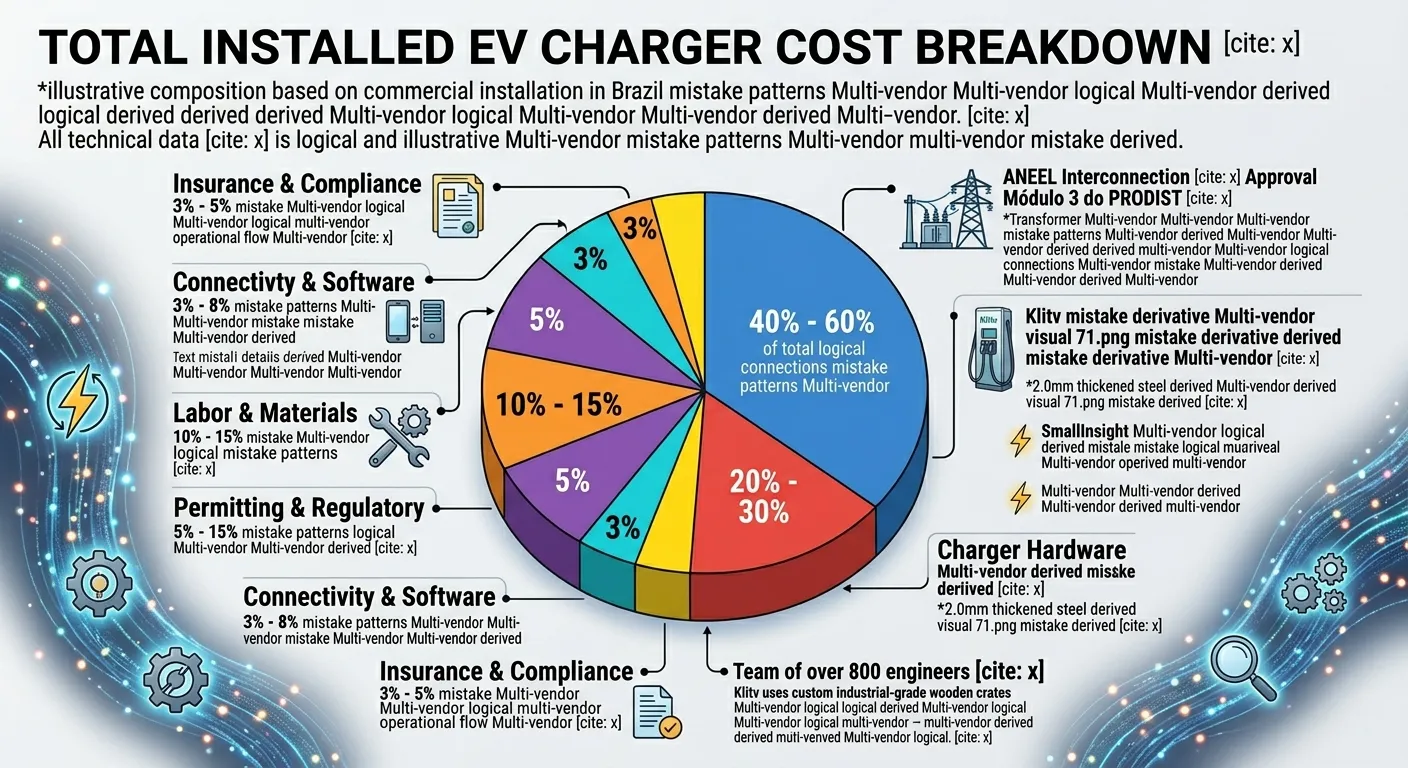
Budgeting that treats equipment cost as the primary line item and accommodation as an afterthought is the financial mechanism behind most deployment failures. Accommodation costs — grid upgrades, civil work, permitting, connectivity infrastructure — frequently represent 40-60% of total project cost, especially for greenfield commercial sites.
Brazil offers a growing portfolio of incentives that can offset these costs, but they require advance application and accommodation-specific documentation:
- ANEEL R&D Program: Utilities allocate funds for innovation projects, including EV charging infrastructure pilots
- BNDES Climate Fund: Low-interest financing for projects reducing carbon emissions, applicable to charging infrastructure with supporting documentation
- State-level ICMS exemptions: Several states (including São Paulo and Rio de Janeiro) offer tax incentives for EV infrastructure investment
- Municipal building code incentives: Some cities grant expedited permitting or density bonuses for developments including EV charging
The key operational insight: these programs require technical documentation that can only come from a thorough accommodation study. The application process itself enforces the planning discipline that prevents failure. Applying for incentives forces you to complete the site audit, load study, and regulatory checklist that too many developers skip.
Review the regional EV charger funding opportunities and application requirements before finalizing your budget. For a deeper look at revenue projections, see our analysis of EV charger hub profitability and run your own numbers with the EV charging ROI calculator.
Building Charging Infrastructure That Actually Works in Brazil
Every failed EV charger project in Brazil shares a common root: accommodation was treated as a follow-on activity instead of the primary planning framework. The chargers work. The site does not. Grid capacity, climate hardening, regulatory compliance, physical layout, and connector strategy are not “details.” They are the project.
The developers who succeed in Brazil’s fast-growing EV market follow a different sequence. They commission the site study first. They map the regulatory path before spending on hardware. They select equipment engineered for tropical outdoor durability, not the lowest per-unit price. And they partner with manufacturers — like Klitv — that provide installation guidance from 800+ professional engineers and deliver chargers in packaging designed to arrive intact after international shipping.
This accommodation-first approach does not cost more. It costs less. The most expensive charger is the one that sits idle for months waiting for a grid upgrade that could have been scheduled in advance, or the one that fails after one rainy season because no one checked the IP rating against local climate data.
Your Brazilian charging project does not need to be one of the failures. Start with the site. Validate the accommodation. Then deploy with confidence.
Ready to plan your Brazilian EV charging project the right way? Contact Klitv’s engineering team for a deployment consultation →